

For decades, automotive safety has focused on one fundamental objective: protecting occupants when a crash occurs. Seatbelts, airbags and crumple zones have collectively saved millions of lives by reducing the forces experienced during a collision. Yet these systems all rely on one important assumption that occupants are sitting in the position they were designed to protect.
In reality, passengers don’t always remain perfectly seated throughout a journey. They lean forward to retrieve an item from the floor, turn to speak with rear-seat passengers, rest against the door while sleeping, or slide forward in their seat during long trips. While these movements may seem harmless, they can significantly reduce the effectiveness of vehicle restraint systems at the exact moment they are needed most.
This is why detecting when a front passenger is out of position is becoming an increasingly important capability in modern vehicles.
When Safety Systems Meet Human Behavior
An "out-of-position" (OOP) occupant is someone whose body is no longer in the expected seating posture. Rather than sitting upright with their back against the seat and the seatbelt correctly positioned, they may be leaning toward the dashboard, sitting unusually close to the instrument panel, twisting sideways, or reaching into another part of the cabin.
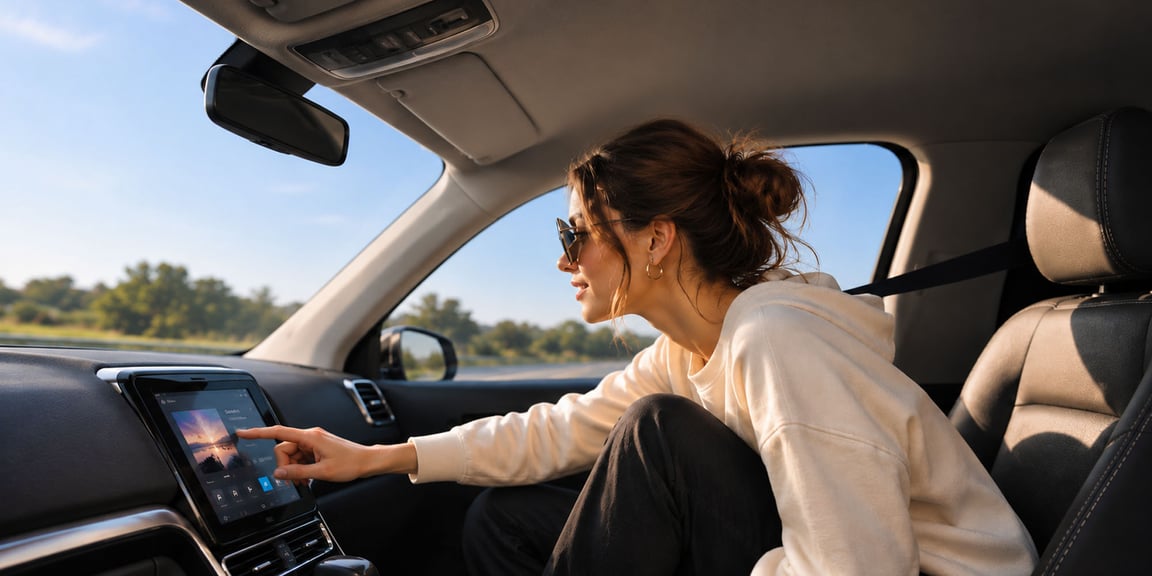
These behaviors are common. A passenger may lean forward to adjust the infotainment system, for example, and if the airbag was to deploy at a close distance there is severe risk of facial bruises, friction burns and even hearing loss. Similarly, if the occupant is twisting their body to look at the backseat, it can cause the seatbelt to sit incorrectly, which in the case of an accident can cause abdominal trauma, lumbar fractures, thoracic injuries or neck/vascular damage.
While the driver is more likely to sit in position, it is common that they hold the wheel in such a way that the arm obstructs the deployment zone. A report by the Royal Society for the Prevention of Accidents states that if an airbag deploys when the driver’s hands are not in the "ten to two" or the "quarter to three" position, the force of the airbag is likely to break the limb.
The challenge is that restraint systems cannot assume occupants remain stationary. Human behavior is dynamic, and vehicle safety systems must increasingly be able to adapt in real time.
Intelligence Inside the Cabin
Traditionally, passenger classification has relied on weight sensors embedded within the seat. While effective for determining whether a seat is occupied, these sensors provide little insight into how an occupant is positioned.
Advances in computer vision and human sensing are changing that.
Neonode’s MultiSensing software uses a single in-cabin camera combined with artificial intelligence to continuously analyze body posture, head position and movement throughout a journey. Rather than taking a snapshot at the start of a trip, this system builds a continuous understanding of how occupants interact within the cabin.
This richer awareness enables the vehicle to distinguish between a passenger sitting normally and one who is out-of-position or is sitting with a potentially unsafe posture.
Making Smarter Safety Decisions
Knowing that a passenger is out of position creates opportunities for restraint systems to respond more intelligently.
Instead of treating every occupant identically, future safety systems can incorporate occupant position alongside crash severity, seatbelt status and occupant characteristics when determining the most appropriate protection strategy.
Depending on the scenario, this could include adapting airbag deployment characteristics, modifying seatbelt pre-tensioning strategies or providing warnings that encourage passengers to return to a safer seating position before a hazardous situation develops.
The goal is not simply to react to a crash, but to optimize protection for the specific occupant in the specific situation.
A More Human-Centered Approach to Safety
The future of automotive safety is becoming increasingly occupant-centric. Vehicles are no longer limited to detecting the presence of passengers; they can now understand how those passengers are behaving in real time to create a personalized safety routine as and when it is needed.
Out-of-position detection, hands-on-wheel detection and seatbelt routing analysis are key parts of this evolution. By combining AI-powered cabin sensing with intelligent restraint systems, vehicles can make more informed decisions, reduce unnecessary injury risk and provide protection that adapts to the people inside the vehicle.
Neonode is leading the way in human understanding in passenger and commercial vehicles. As software-defined vehicles continue to evolve, understanding the human position, behavior and intent inside the cabin is essential for safer mobility.
